Better Balance-Better Brain-Better Days
Tai Chi for Balance and Brain Health
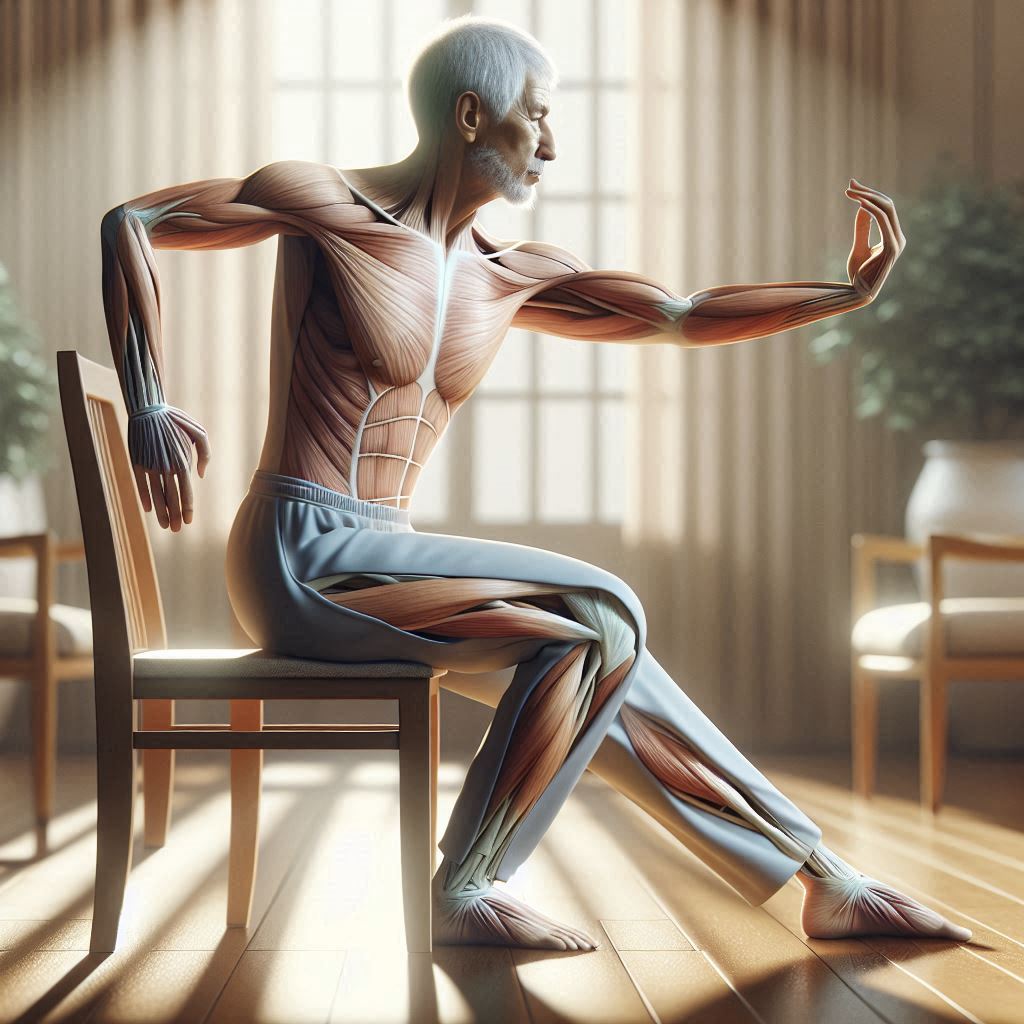
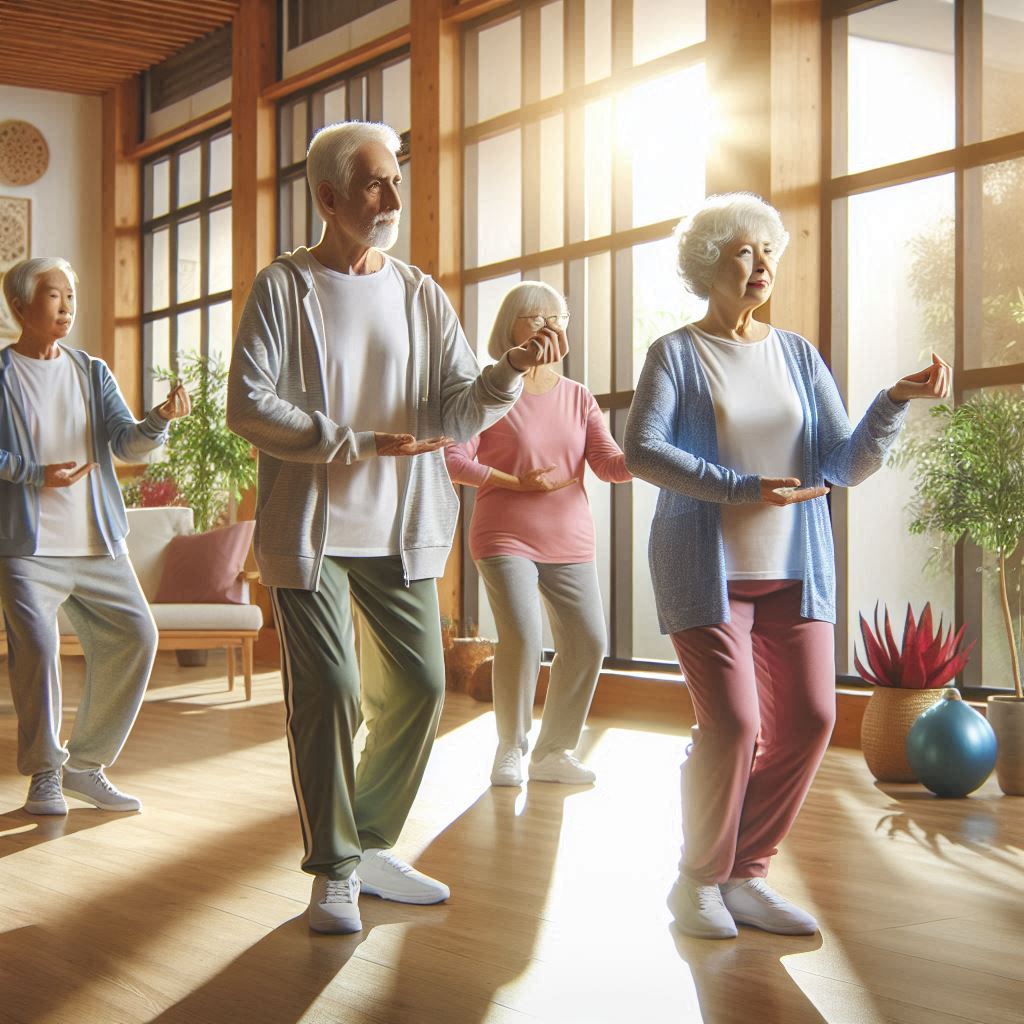
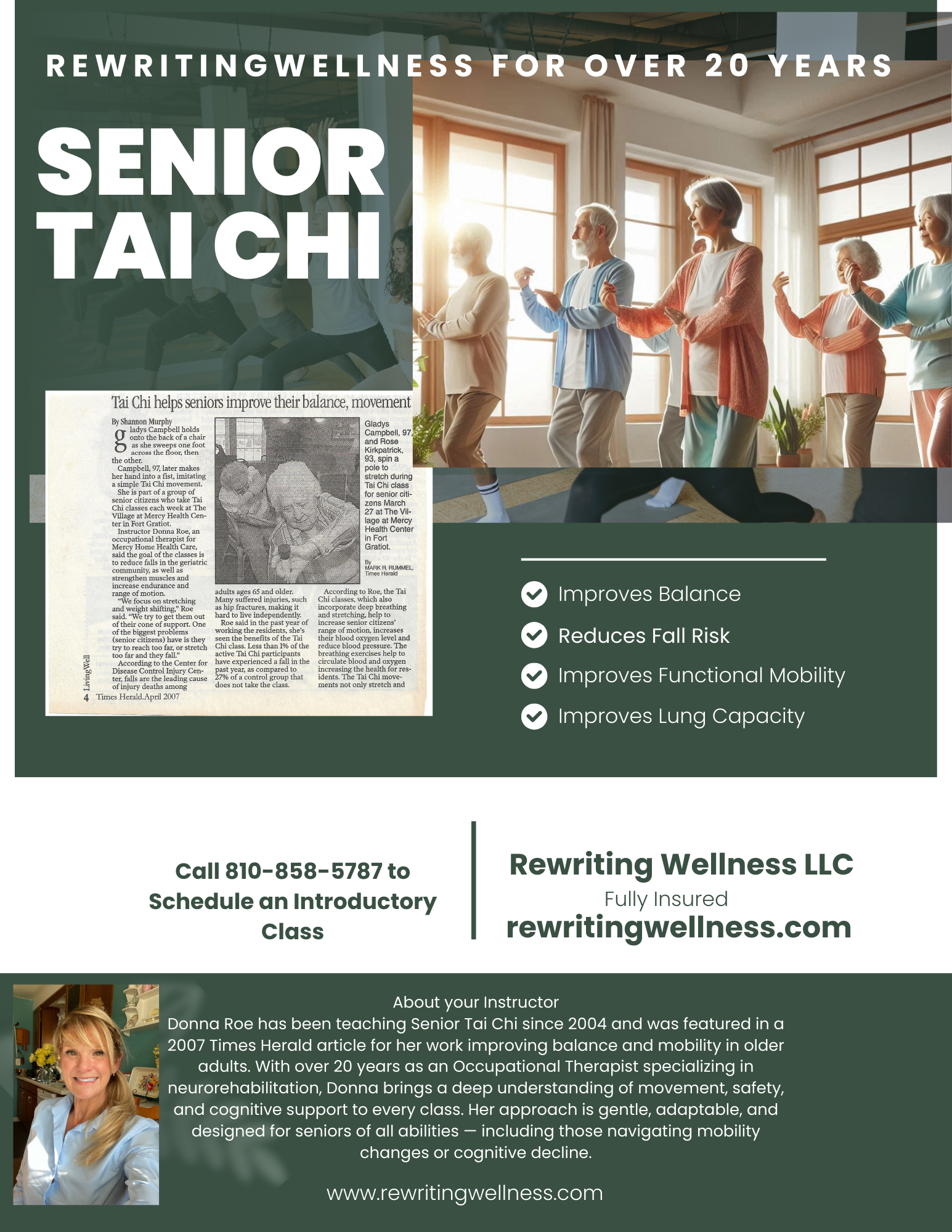
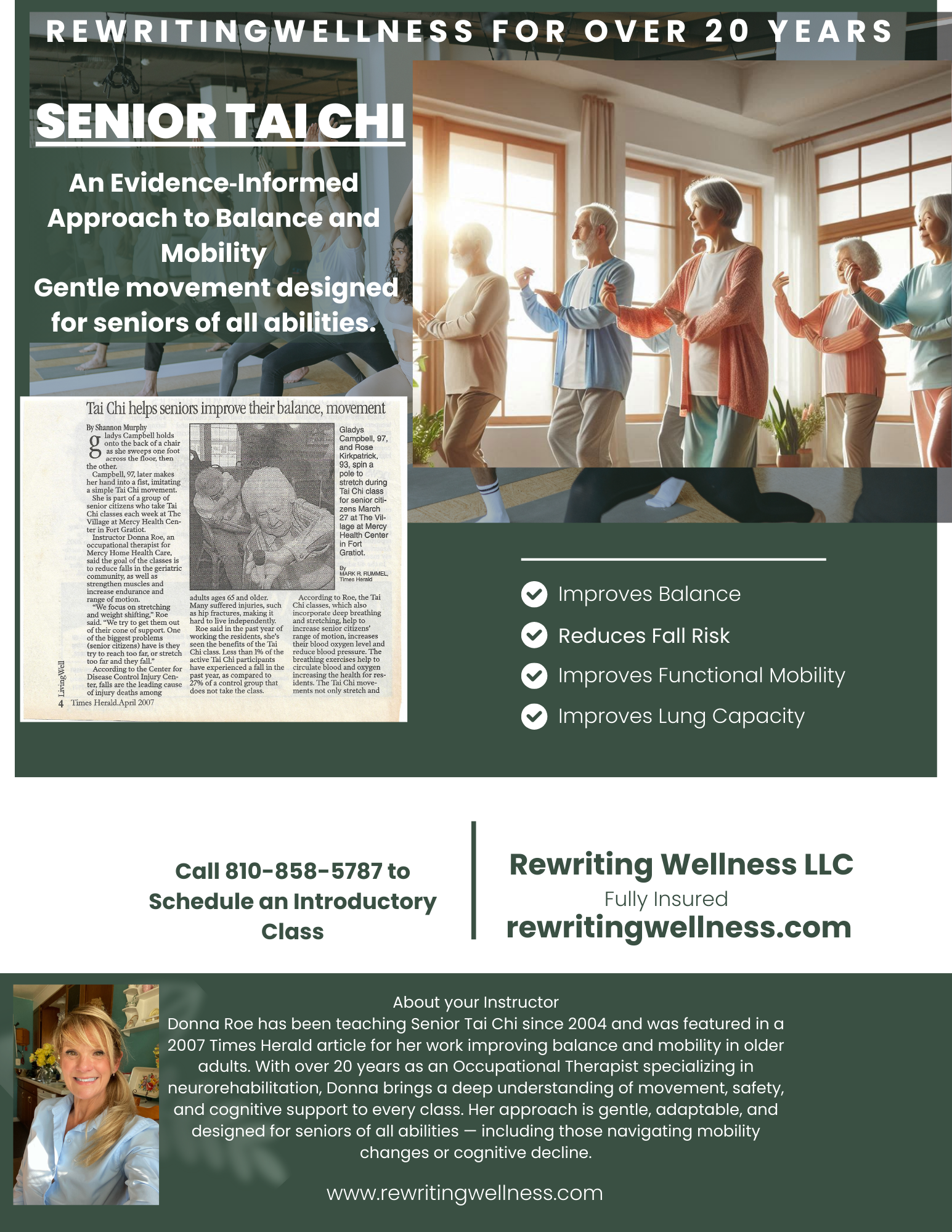 This Senior Tai Chi program is a gentle, research‑supported movement program designed for older adults, people with mobility changes, and individuals living with cognitive decline or neurological conditions. Every class blends slow, repetitive movements with simple breathwork to support balance, attention, and emotional regulation. The program is built on more than twenty years of neurorehabilitation experience and lived neurological recovery. Movements are taught in a calm, step‑by‑step style that helps participants feel safe, confident, and successful—whether they are standing, seated, or using assistive devices. Benefits include: - steadier balance and improved stability - increased confidence with daily movement - better focus, attention, and coordination - reduced fall risk - calmer nervous system and emotional grounding - gentle support for memory and cognitive function Class Format: - 30–45 minutes - standing, seated, or mixed‑ability - no prior experience needed - adaptable for mobility, cognitive, or sensory changes About the Instructor: Donna Roe is a Neurological Recovery Educator, Senior Tai Chi Instructor, and former Occupational Therapist with over twenty years of experience in neurorehabilitation. She has taught Tai Chi to seniors since 2004 and was featured in a 2007 newspaper article for her work supporting older adults through movement. Her teaching is grounded in compassion, safety, and the belief that every brain and body can learn at its own pace. Mission: To offer a safe, welcoming space where older adults can move with confidence, reconnect with their bodies, and support their brain health through gentle, accessible Tai Chi.
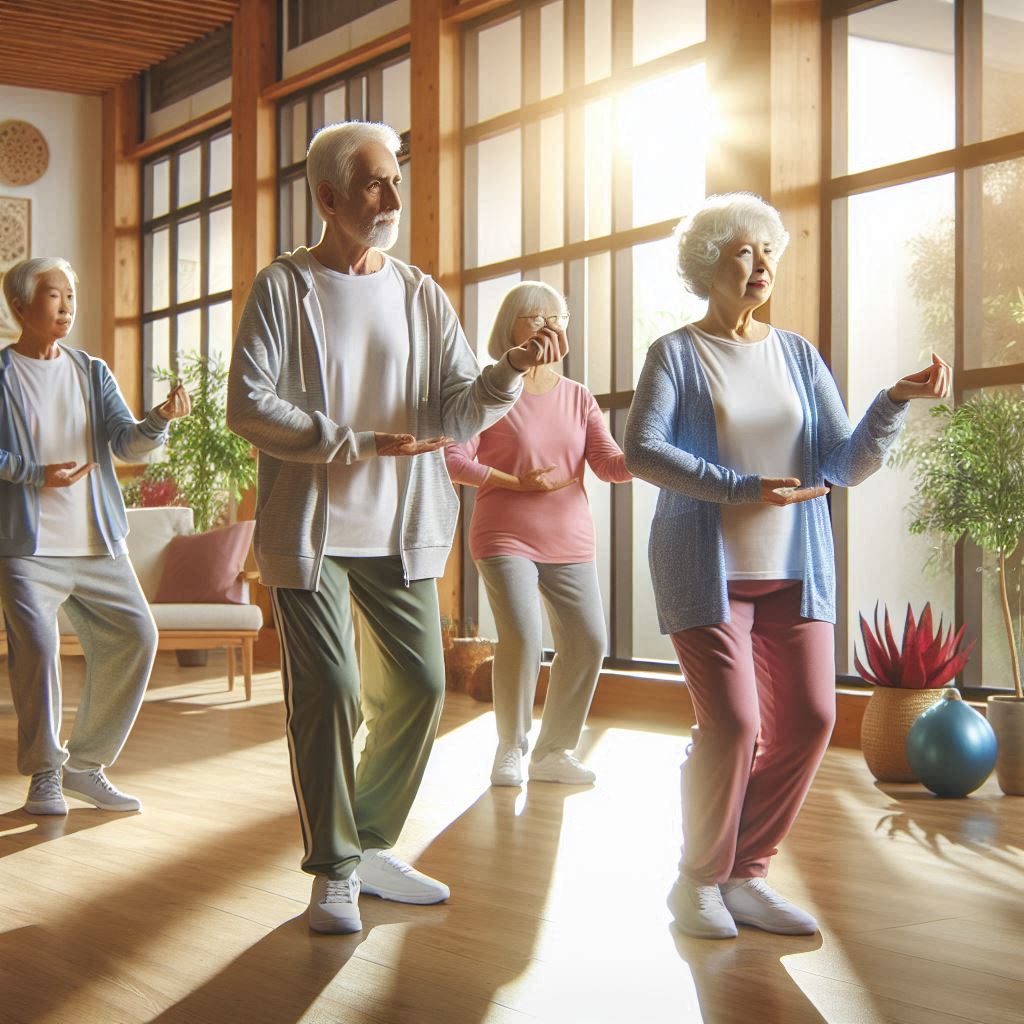
Tai Chi for Balance & Brain Health is a neurologically informed movement program designed for older adults, memory‑care residents, and individuals with neurological impairment. The program uses simple, repetitive movement patterns that support balance, mobility, and cognitive clarity—even for residents with limited memory, attention, or carryover.
Classes blend Tai Chi principles, PNF (Proprioceptive Neuromuscular Facilitation) patterns, gentle nerve‑glide stretches, and mindlessness practices to reduce cognitive load and promote safer, more coordinated movement. Sessions are slow, predictable, and easy to follow, making them appropriate for mixed‑ability groups, including those who require seated participation.
This approach improves postural stability, reduces fall risk, enhances gait and mobility, and helps regulate the nervous system. It is specifically designed for senior‑living environments and supports residents with dementia, Parkinson’s, stroke history, and general age‑related decline.
Classes can be offered onsite for groups or small sessions, with minimal space and no equipment required.
Why staff value this program
Supports fall‑prevention goals
Appropriate for residents with dementia or limited comprehension
Reduces agitation and promotes calm
Enhances mobility, posture, and confidence
Easy to implement with no equipment or setup
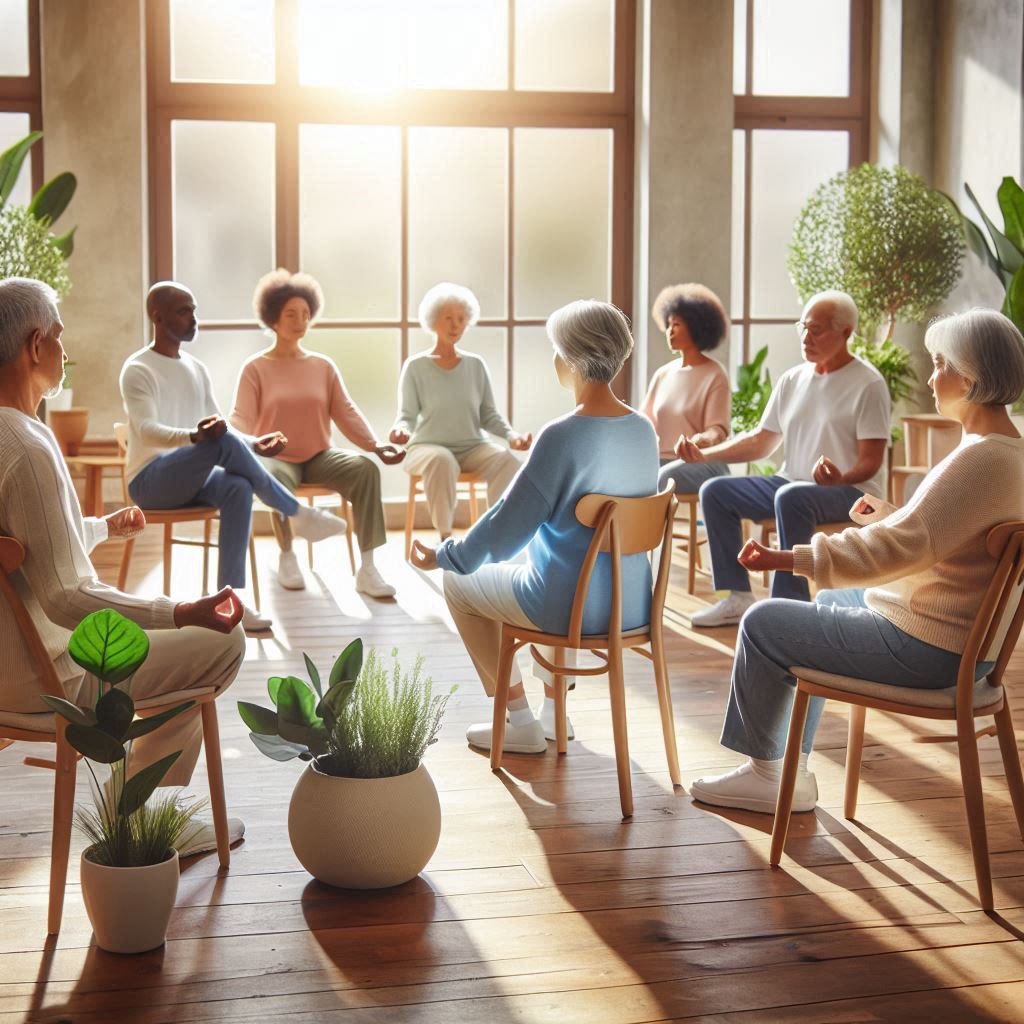
Safe for mixed‑ability groups (standing or seated)
 Led by an instructor with neuro‑rehab expertise
Services for Balance and Brain Health
Tai Chi for Balance & Brain Health Services
Your classes blend gentle Tai Chi patterns, deep diaphragmatic breathing, therapeutic PNF (Proprioceptive Neuromuscular Facilitation) movement sequencing, and safe nerve‑glide stretches to support balance, cognition, and nervous‑system regulation. Each session is designed for older adults and individuals with mobility or cognitive changes, offering slow, structured, and accessible movement that helps the brain and body work together more efficiently.
What the sessions include
Tai Chi patterns taught in a simple, repetitive format that improves coordination, postural control, and confidence with movement.
Deep diaphragmatic breathing to calm the nervous system, improve oxygenation, and support attention and emotional regulation.
PNF (Proprioceptive Neuromuscular Facilitation) movement sequences using diagonal, cross‑body, and rhythmic patterns that stimulate neuroplasticity and support cognitive processing.
Gentle nerve‑glide stretches to reduce stiffness, improve comfort, and support healthy nerve mobility.
Standing or seated options so every participant can move safely at their own pace.
Clear, step‑by‑step instruction that reduces overwhelm and helps participants feel successful, even with memory or processing challenges.
Benefits for participants
steadier balance and reduced fall risk
improved attention, sequencing, and coordination
increased confidence with daily movement
reduced nerve tension and improved comfort
calmer mood and better self‑regulation
gentle support for memory and cognitive function
a sense of connection, dignity, and accomplishment
How services are offered
30 minute onsite classes
standing, seated, or mixed‑ability
 suitable for independent living, assisted living, memory care, and community programs.